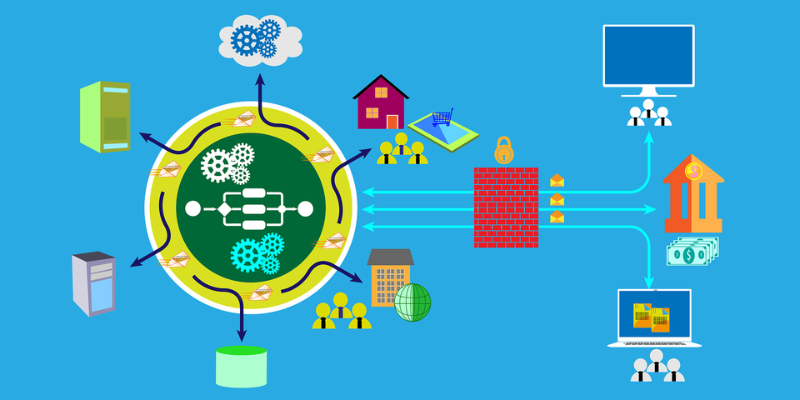
Organizations in today’s digital environment mostly depend on data systems for operations management, service delivery, decision-making support, and customer experience maintenance. Businesses across industries such as finance, healthcare, retail, education, and technology require uninterrupted access to data and applications to ensure smooth operations. Even a short period of downtime can lead to financial losses, operational disruptions, reduced productivity, and poor customer satisfaction.
To avoid these challenges, organizations increasingly focus on building high-availability data systems. The capacity of a system to continue functioning and being available with little downtime, especially in the face of hardware malfunctions, software problems, cyberattacks, or unforeseen interruptions, is referred to as high availability. High-availability systems are designed with redundancy, fault tolerance, scalability, and disaster recovery capabilities to ensure continuous performance and reliability.
Modern enterprises use advanced infrastructure architectures, cloud technologies, load balancing, replication techniques, and automated monitoring systems to build resilient data environments. High-availability systems not only improve operational continuity but also support business growth, customer trust, and digital transformation initiatives. Many aspiring professionals enroll in a Data Engineering Course in Chennai to understand how large-scale data infrastructures, distributed systems, and real-time data processing environments are designed for maximum reliability and performance.
Understanding High-Availability Data Systems
A high-availability data system is designed to minimize service interruptions and maintain continuous access to applications and data. The primary objective is to eliminate single points of failure and ensure that systems continue functioning even when individual components fail.
High availability is commonly measured using uptime percentages such as 99.9% availability, 99.99% availability, and 99.999% availability. The higher the availability percentage, the lower the expected downtime.
High-availability systems typically include redundant servers, backup storage, replicated databases, network failover systems, automated recovery processes, and load balancing mechanisms. These components work together to maintain system reliability and operational continuity.
Importance of High Availability in Modern Businesses
Businesses today operate in highly competitive and digitally connected environments where customers expect uninterrupted services and fast access to information.
Downtime can negatively affect revenue generation, customer trust, brand reputation, productivity, and regulatory compliance. Even a few minutes of interruption may have serious operational and financial repercussions for sectors including banking, healthcare, and e-commerce. High-availability systems help organizations improve business continuity, enhance customer experiences, support remote operations, enable real-time services, and maintain operational stability. As businesses continue adopting cloud computing, automation, and real-time analytics, the importance of high availability continues growing rapidly.
Designing Redundant Infrastructure
Redundancy is one of the core principles of building high-availability systems. Redundant infrastructure ensures that backup components are available if primary systems fail.
Organizations commonly implement redundancy through multiple servers, backup databases, duplicate storage systems, secondary network connections, and alternative power supplies. For example, if one server fails, another server automatically takes over operations without interrupting services.
Redundant infrastructure reduces the risk of complete system failures and improves operational reliability. Many organizations also use geographically distributed infrastructure to protect against regional outages and natural disasters.
Database Replication Strategies
Databases are critical components of high-availability systems because applications rely on continuous access to data.
Database replication involves maintaining multiple copies of data across different servers or locations. Replication helps ensure data availability even if one database server becomes unavailable.
Common replication methods include master-slave replication, multi-master replication, synchronous replication, and asynchronous replication. Replication improves fault tolerance, read performance, disaster recovery, and data accessibility.
Organizations handling large-scale applications often use distributed database architectures to improve scalability and maintain high availability.
Load Balancing for High Availability
Load balancing distributes traffic and workloads across multiple servers to improve performance and prevent system overloads.
By serving as a middleman between users and servers, a load balancer effectively routes requests to available resources.
Benefits of load balancing include improved performance, reduced server failures, better resource utilization, increased scalability, and enhanced availability. The load balancer minimizes service interruptions by automatically rerouting traffic to healthy servers in the event that one server fails.
Load balancing is widely used in cloud environments, web applications, and enterprise infrastructure systems.
Implementing Failover Mechanisms
Failover systems automatically transfer operations to backup systems when primary systems fail.
Failover mechanisms help organizations maintain uninterrupted services during hardware failures, network disruptions, software crashes, and maintenance activities.
There are two main types of failover: active-passive failover and active-active failover. In active-passive configurations, backup systems remain on standby until failures occur. In active-active configurations, multiple systems operate simultaneously to improve availability and performance.
Automated failover reduces downtime and improves system resilience significantly.
Importance of Cloud Infrastructure
Cloud computing has become highly important for building high-availability data systems because cloud providers offer scalable, distributed, and resilient infrastructure environments.
Cloud platforms such as AWS, Microsoft Azure, and Google Cloud Platform (GCP) provide features such as auto-scaling, global data centers, managed backups, disaster recovery services, and high-availability configurations.
Cloud infrastructure allows organizations to distribute workloads across multiple regions and availability zones to improve reliability and reduce downtime risks. Businesses increasingly adopt cloud-native architectures to improve operational flexibility and scalability.
Many learners choose a Best IT Course Institute in Chennai to gain practical exposure to cloud infrastructure, distributed computing, and modern data management technologies that support high-availability environments.
Data Backup and Disaster Recovery
Planning for disaster recovery and backup are crucial elements of high-availability systems.
Backups ensure that organizations can recover data after cyberattacks, hardware failures, human errors, natural disasters, or system corruption.
Effective disaster recovery strategies include regular backups, automated recovery processes, offsite storage, data replication, and recovery testing. Recovery objectives commonly include Recovery Time Objective (RTO) and Recovery Point Objective (RPO).
Organizations must carefully define recovery goals to minimize operational disruptions during emergencies.
Monitoring and Performance Management
Continuous monitoring helps organizations identify system issues before they cause service disruptions.
Monitoring tools track server health, network performance, database activity, application response times, resource utilization, and security events. Automated alerts notify administrators when performance thresholds are exceeded or failures occur.
Monitoring systems help improve incident response, system optimization, preventive maintenance, and operational visibility. Advanced analytics and AI-driven monitoring tools are increasingly used to predict failures and optimize infrastructure performance proactively.
Security in High-Availability Systems
Security plays a major role in maintaining system availability because cyberattacks and unauthorized access can disrupt services significantly.
Organizations implement security measures such as firewalls, encryption, access controls, identity management, intrusion detection systems, and security monitoring. Distributed denial-of-service (DDoS) protection is especially important for maintaining service availability in internet-facing applications.
Strong security practices help protect infrastructure while reducing downtime risks caused by security incidents.
Scalability and Future Growth
High-availability systems must support future business growth and increasing workloads.
Scalable architectures allow organizations to add resources dynamically, expand storage capacity, handle traffic spikes, and support global users. Cloud-native technologies, containerization, and microservices architectures improve scalability and operational flexibility.
Organizations increasingly design systems that can scale automatically based on demand to maintain consistent performance and availability.
Challenges in Building High-Availability Systems
Although high-availability systems provide several advantages, organizations may face implementation challenges such as infrastructure complexity, higher operational costs, security management difficulties, data synchronization issues, and maintenance overhead.
Managing distributed systems across multiple environments may also require skilled professionals and advanced monitoring tools. Despite these challenges, proper planning, automation, and infrastructure management strategies help organizations build reliable and resilient systems successfully.
Future of High-Availability Data Systems
The future of high-availability systems continues evolving with advancements in artificial intelligence, cloud computing, edge computing, automation, predictive analytics, and distributed architectures.
Emerging technologies such as AI-driven infrastructure monitoring and self-healing systems are expected to improve system reliability further. Organizations increasingly depend on real-time services, cloud-native applications, and globally distributed infrastructure, making high availability even more important in future digital ecosystems.
Today, even a B School in Chennai is increasingly emphasizing digital infrastructure management, cloud technologies, business analytics, and technology-driven operations to help students understand the growing importance of high-availability systems in modern enterprises.
Building high-availability data systems is essential for organizations that depend on uninterrupted access to applications, services, and data. High-availability architectures improve operational continuity, reduce downtime risks, enhance customer experiences, and support business growth.
By implementing redundancy, replication, load balancing, failover systems, cloud infrastructure, monitoring tools, and disaster recovery strategies, organizations can create resilient and scalable data environments capable of handling modern business demands.
As digital transformation continues accelerating across industries, high-availability systems will remain a critical component of enterprise IT infrastructure, helping businesses maintain reliability, improve operational efficiency, and support continuous innovation in competitive digital markets.