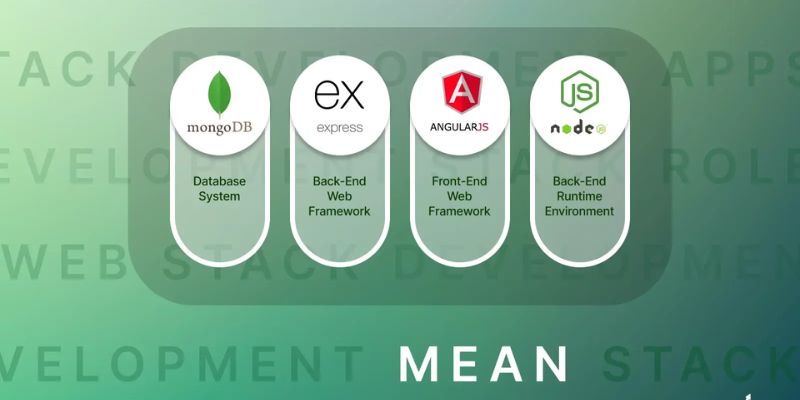
Scalability, speed, and smooth user experiences are essential for modern web applications. Because it allows developers to create dynamic, responsive, and data-driven apps using a single programming language across the whole development process, the MEAN Stack has grown to be one of the most well-liked full-stack JavaScript technologies. MongoDB, Express.js, Angular, and Node.js can be combined by developers to create robust apps for enterprise settings, startups, and corporations.
The constancy of the MEAN Stack is one of its main benefits. Because JavaScript is used at every layer, developers may work more productively, reuse code, and facilitate communication between front-end and back-end teams. You can also learn through FITA Academy. Understanding the MEAN Stack development process enables you to design safe, scalable, and high-performing web apps, whether you’re developing an e-commerce platform, project management system, social networking application, or corporate dashboard.
Understanding the Components of the MEAN Stack
Four technologies make up the MEAN Stack, which supports full-stack web development. Every component plays a distinct part in managing various facets of a program. The database layer is MongoDB. It makes managing both organized and unstructured data easier by storing information in adaptable documents that resemble JSON. It is appropriate for applications with expanding data requirements due to its performance and scalability.
The backend framework is Express.js. By offering middleware, routing, and API management capabilities, it makes server-side programming easier. Express is used by developers to effectively handle client requests, interact with databases, and provide answers. The application’s front end is powered by Angular. Developers can utilize dependency injection, data binding, and reusable components to create interactive user interfaces. Node.js completes the stack by offering a quick JavaScript runtime environment with an event-driven design that can manage numerous requests at once.
Set Up Your Development Environment
Writing application code requires a well-prepared development environment. Installing Node.js, which comes with the Node Package Manager (npm), is the first step. You can also learn through MEAN Stack Training in Chennai for expert guidance. By enabling developers to install libraries and frameworks with a few commands, Npm streamlines dependency management. Next, set up access to a MongoDB database hosted in the cloud or install MongoDB locally. Install the Angular CLI to create components, generate projects, and automate development processes once the database is accessible.
Set up distinct folders for the frontend and backend after installing the necessary applications. As the application expands, this framework keeps the project organized and facilitates maintenance. Git and other version control systems should be set up right away to monitor code modifications and facilitate teamwork.Before development starts, testing the installation with a basic Node.js server and Angular application guarantees that the environment is set up appropriately.
Build the Backend with Node.js and Express.js
The backend handles business logic, authentication, database communication, and API development. Using Express.js, developers create RESTful APIs that allow the Angular frontend to exchange data with the MongoDB database. A typical backend project begins by organizing folders for routes, controllers, models, middleware, and configuration files. This modular approach improves readability and simplifies future maintenance.
JSON Web Tokens (JWT) are frequently used for authentication, enabling users to safely log in and access resources that are protected. Middleware methods handle errors uniformly across the application, manage rights, and validate requests. Additionally, Express easily interfaces with third-party packages for file uploads, security, logging, and validation. Developers can create scalable backend services that are simple to grow as business needs change by adhering to clean code standards and upholding an organized API architecture.
Design Interactive User Interfaces with Angular
With Angular, developers can design feature-rich, responsive user interfaces. Its component-based architecture facilitates the maintenance and expansion of applications while promoting code reuse. Dashboards, login forms, navigation menus, user profiles, and product pages are among the reusable elements that make up the application interface. While Angular’s routing module enables seamless page navigation without the need to restart the application, services handle connection with backend APIs.
By offering instant feedback during data entering, reactive forms streamline input validation and enhance the user experience overall. You can learn it form Training Institute in Chennai with expert guidance. Dependency injection, which encourages clean architecture and minimizes code duplication, is also supported by Angular. Particularly in larger projects where several components require access to shared information, state management approaches aid in the effective organization of application data. Angular assists developers in creating applications that function uniformly on PCs, tablets, and smartphones when combined with responsive design concepts.
Connect MongoDB and Manage Application Data
Instead of utilizing conventional relational tables to store application data, MongoDB uses collections and documents. Developers can modify data models as application requirements change thanks to this adaptable framework. By offering schema definitions, validation, and object modeling features, libraries like Mongoose streamline Node.js and MongoDB interactions. To guarantee uniform data treatment across the application, developers create models that represent users, goods, orders, or other business entities.
Database interaction is based on CRUD operations, which stand for Create, Read, Update, and Delete. Before producing structured responses, APIs handle database transactions, conduct business logic in Express.js, and receive requests from Angular. While validation guarantees data integrity, proper indexing enhances query performance. Secure access restrictions and routine database backups help shield important company data from unintentional loss or illegal access.
Test, Secure, and Deploy Your Application
Developing an application is just one step in the process. Before a feature is deployed, extensive testing guarantees that it operates as intended. While integration testing assures that frontend, backend, and database interactions function as intended, unit testing validates individual components. Development should be done with security in mind. Now we know about what is MEAN stack and its benefits. User data is shielded from frequent security risks by input validation, password encryption, HTTPS communication, authentication methods, and secure API architecture. Frequent dependency updates lessen the vulnerabilities caused by out-of-date software.
Cloud platforms that support Node.js apps can be used for deployment. Sensitive configuration information should be stored in environment variables rather than being directly embedded in source code. After deployment, monitoring tools assist in tracking application performance, identifying issues, and preserving high availability. By automating testing and deployment procedures, Continuous Integration and Continuous Deployment (CI/CD) pipelines further optimize software delivery.
Best Practices for Successful MEAN Stack Development
MEAN Stack projects that are successful depend on more than just technical expertise. Coders should provide comprehensive documentation that facilitates long-term maintenance, adhere to coding standards, and maintain consistent project architecture. Debugging is made easier and scalability is increased when apps are divided into reusable modules. In order to facilitate future improvements and third-party integrations, API endpoints should continue to be consistent and thoroughly defined.
Lazy loading, database indexing, caching, and effective API design are examples of performance optimization strategies that increase responsiveness while lowering server load. Frequent code reviews promote information exchange and assist in spotting possible problems before they become operational. Compatibility, increased security, and access to the newest features are guaranteed when all four technologies are kept up to date. Developers that consistently advance their knowledge of JavaScript, software architecture, and contemporary development techniques are better able to create dependable systems that satisfy changing business requirements.